
Material comparisons are easy to flatten into a contest. Titanium is described as the established standard, zirconia as the metal-free challenger, and patients are encouraged to decide which one is “better.” A 2026 randomized clinical trial makes that framing harder to sustain.
The multicenter study compared two-piece zirconia implants with titanium implants supporting single crowns. Researchers placed 61 implants of each material. After one year of loading, zirconia showed a 100% survival rate, while titanium showed 96.5% after two failures. The researchers found no statistically meaningful differences between the groups in the outcomes they measured.
Those numbers don’t crown a universal winner. The trial covered a specific implant design, single restorations and a limited follow-up period. Material decisions need more context than a color or one survival percentage.
Patients need to know which system fits the proposed site and restoration, and how much evidence exists for that exact design.
That includes the fixture, abutment and crown, since each part affects the repair options available later.
One-year results answer a narrow question
A randomized clinical trial is designed to reduce some of the selection problems that complicate simple case reports. When comparable patients receive different interventions under a structured protocol, researchers can make a clearer comparison of outcomes within that study.
Here, both groups received two-piece implants and single crowns. That makes the study more relevant to modern restorative flexibility than comparisons involving only older one-piece ceramic designs. A two-piece arrangement allows the implant fixture and restorative abutment to serve separate roles.
The trial examined marginal bone changes, survival, wound healing, and soft-tissue measures. Mean marginal bone loss from placement to crown insertion was reported as 1.10 millimeters for titanium and 0.94 millimeters for zirconia. During the following year, the additional average changes were small in both groups.
Still, a one-year result remains a one-year result. Implant treatment is chosen with a much longer horizon in mind. Mechanical fatigue, changes in gum tissue, maintenance habits, bite forces, restorative repairs, and inflammatory disease may emerge over periods that an early analysis cannot fully represent.
Two failures among 61 titanium implants leave too much uncertainty for a sweeping material claim. In a group that size, a few events can noticeably change the percentage.
Small trials can spot large differences more easily than small ones. A finding of no statistical difference does not mean the materials performed identically.
That restraint works in both directions. A strong early zirconia result is encouraging evidence for the system studied, but it does not erase titanium’s much larger body of long-term clinical use. New evidence adds to the comparison; it does not make older evidence disappear.
Material properties matter through the implant design
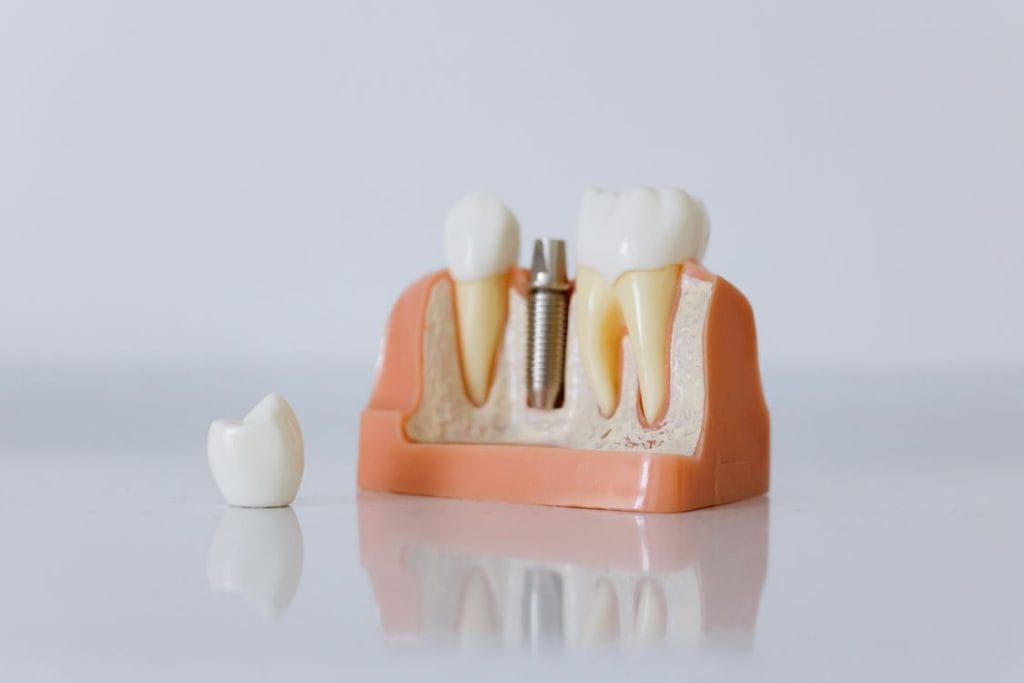
Titanium and zirconia are not interchangeable substances. Titanium combines strength with a degree of elasticity and has been developed into many implant dimensions, connections, surfaces, and restorative components. Its long history gives clinicians a broad evidence base across different situations.
Zirconia is a high-strength ceramic with a light color. It can be useful where thin gum tissue might show a gray cast from an underlying metal component. Dentists also study its resistance to corrosion and how nearby tissue responds to it.
Ceramics are generally less forgiving of certain tensile or bending stresses than metals. Modern manufacturing has improved zirconia considerably, but implant geometry, component design, material processing, and bite management remain important. “Zirconia” describes a material family, not one identical product.
The same is true of titanium. Surface treatment, alloy composition, connection design, dimensions and restorative compatibility vary among systems. Results from one tested product apply to that product.
The site in the mouth adds another layer. A front tooth with thin tissue and high esthetic demands creates a different decision from a molar exposed to heavy force. A single crown allows different restorative choices from a full-arch bridge. A patient who grinds heavily may raise mechanical considerations that are less prominent in another case.
Material can also affect what happens above the fixture. The available abutments, screw connections, crown design, retrievability, and laboratory workflow influence the final restoration. Patients often focus on what is placed in bone, while the serviceability of the complete system may matter just as much over time.
The choice should be patient-specific
A clinician recommending titanium should be able to explain more than tradition. The rationale might involve long-term documentation, available dimensions, the required restorative configuration, the treatment site, or familiarity with a system that has performed predictably in similar cases.
A clinician recommending zirconia should also move beyond a broad “metal-free” appeal. The discussion should identify the specific esthetic, biological, or patient-preference considerations involved, along with the evidence and mechanical limits of the proposed design.
Patients can ask whether both materials suit their anatomy and which finding narrows the choice. Bone volume, gum thickness, bite force, implant location and the final restoration may all influence the answer.
They can also ask how the practice manages long-term maintenance. Healthy tissue depends heavily on cleanable restoration contours, daily plaque control, professional care, and early attention to inflammation. Choosing a promising material does not cancel those responsibilities.
The 122-implant trial found comparable early outcomes under the conditions studied. A patient still needs answers tied to the actual case: where the implant will sit, what forces it will carry, how the tissue may look, whether the restoration can be repaired and which evidence applies to that exact system.
