
There is a particular kind of weather report that locals in Southern Nevada have learned to read between the lines. When the National Weather Service released its year-end summary for 2025, the headline number was almost reassuring: it was not the hottest year ever. But the detail underneath told a different story about where desert living is heading.
The valley closed out 2025 as its fifth-warmest year on record, with an average temperature of 71.8 degrees, roughly 1.7 degrees above normal. For anyone who spent the summer trying to use their backyard before noon or after sunset, that figure landed as confirmation rather than surprise.
What makes the year worth paying attention to is not the single peak temperature. It is the pattern of heat that refuses to let go, and what that pattern is quietly doing to the way people build and use outdoor space across the Las Vegas Valley.
What the 2025 Numbers Actually Say About Desert Summers
The raw data is blunt. Las Vegas shattered 38 temperature records over the course of the year, the bulk of them high minimum temperatures rather than dramatic single-day highs.
That distinction matters more than it sounds. A record high makes the news for an afternoon. A record warm overnight low means the desert never cools off, the concrete never sheds its heat, and a backyard that should be usable at 9 p.m. stays uncomfortable well past dark.
The summer still brought its share of brutal afternoons. The mercury hit 112 degrees twice, on July 14 and again in mid-August, and the valley logged 77 days at or above 100 degrees. December, meanwhile, became the warmest on record, stretching the warm season past its old boundaries on both ends.
For homeowners, the takeaway is not that one summer was unbearable. It is that the comfortable shoulder seasons keep shrinking, and the windows for enjoying an exposed patio keep narrowing year over year.
Why Shade Stopped Being a Luxury in the Valley
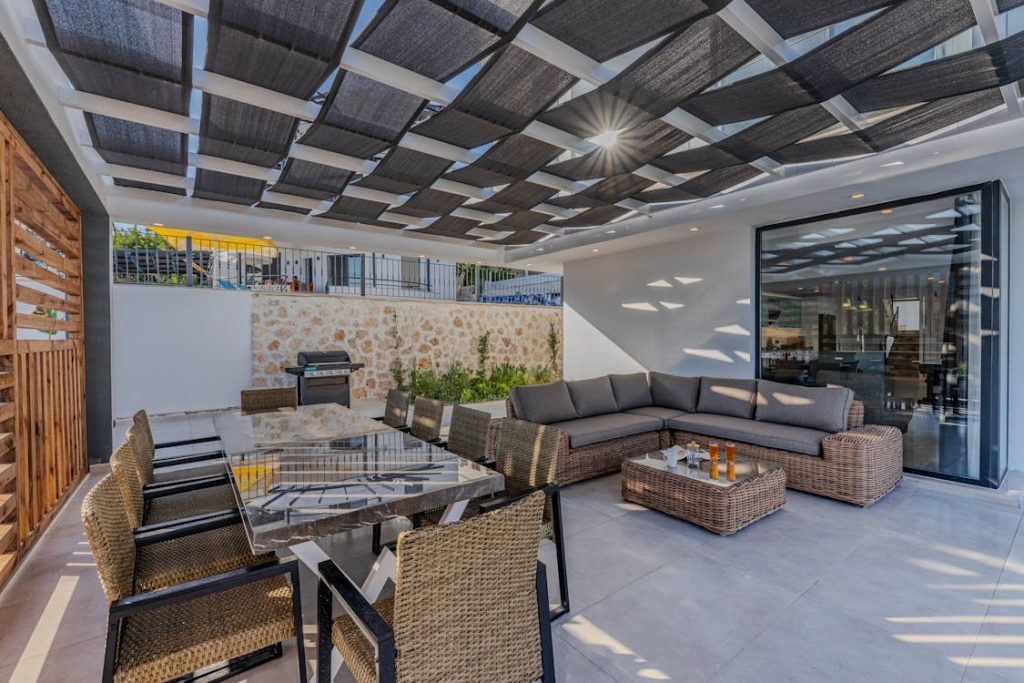
For a long time, a covered patio in Las Vegas was treated the way a fireplace is treated in a mild climate. Nice to have, pleasant to look at, not strictly necessary. That framing has aged poorly.
When overnight temperatures stay elevated and the sun is delivering direct, unfiltered exposure for the better part of nine months, an uncovered slab of concrete behind the house becomes effectively unusable for much of the year. Shade is no longer a decorative upgrade. It is the difference between having functional square footage outdoors and having a heat trap nobody steps onto.
There is also a hard practical layer to it. Sustained UV exposure breaks down outdoor furniture, fades fabric, dries out wood, and turns patio doors and adjacent interior rooms into solar ovens that drive up cooling bills.
A solid cover changes the math on all of it at once. It protects the furniture, it cuts the radiant load on the back of the house, and it reclaims a space that the climate had otherwise written off.
The Quiet Shift Toward Covered Outdoor Space
None of this is theoretical for the contractors and homeowners working in Henderson, Summerlin, and the wider valley. The demand pattern has shifted away from open pergolas that look good in a photo and toward solid, insulated structures that actually block the sun.
Insulated roof panels and solid aluminum covers have moved from the upgrade column to the default request, precisely because a lattice or an open slat design does very little when the problem is sustained, overhead desert heat.
The aluminum-based systems popular in the region carry an additional advantage in a climate like this one. They do not warp, rot, or fade the way wood does under relentless sun, and they shrug off the temperature swings that crack and degrade lesser materials over a few seasons.
The result is a market quietly reorganizing itself around a simple premise. If the valley is going to keep logging top-five warmest years, the backyard has to be engineered for that reality rather than decorated around it.
The fifth-warmest year on record will not be the last of its kind. The homeowners treating shade as infrastructure rather than ornament are the ones who will still be using their backyards in July, and that is starting to show up in what gets installed across Southern Nevada.
